
Thursday, October 12, 2017

Friday, September 14, 2012
Advocate for Dogs
The most complete all-in-one parasite protection

Advocate not only treats parasite infections, but monthly treatment can help protect your dog against fleas, heartworm(microfilaria), gastrointestinal worms, mites and lice.
An easy-to-use spot-on application, Advocate acts on multiple stages of parasites to treat infections faster and sustain protection longer.
Why choose Advocate?
• Advocate provides fast relief from fleas
Stops fleas biting in 3-5 minutes. (1)
Kills fleas on contact without the need to bite, which means no irritation, no scratching and no Flea Allergy Dermatitis (FAD).
Dead fleas can’t transmit flea tapeworm.
• Advocate prevents deadly heartworm
The active ingredient (moxidectin) enters your pet’s bloodstream and with monthly use will prevent heartworm infection in dogs.
• Advocate protects your pet and family from gastrointestinal worms
Advocate clears up infections quickly by killing up to 100% of adult, immature and larval stages of hookworm, roundworm and whipworm while reducing environmental contamination.
• Advocate controls ear mites
Advocate is highly effective as a single dose treatment of ear mites.
• Advocate controls demodex
Monthly application of Advocate for 2 to 4 treatments has been shown to be effective in the treatment of this mite that can cause a debilitating skin condition in dogs. Your veterinarian will diagnose and provide appropriate advice for the treatment of demodectic mange in your pet.
• Advocate treats and prevents sarcoptic mange
Advocate eliminates sarcoptic mange mites after a single dose.
• Advocate lasts all month and is easy to use
Simply apply the dose to the back of your dog between the shoulder blades (see directions for use for dogs over 25 kg) and from there it spreads across the skin and through the coat, where it is effective for 1 month.it is available for all weight scales.
• Advocate is waterproof
Advocate treated dogs can do what they like to do without you worrying about their flea protection. Advocate remains effective following soap-free shampoo treatment, bathing or exposure to rain.
• Advocate is safe and effective
Advocate is tough on parasites but gentle enough to use on puppies from 7 weeks.
This product not available in Sri Lanka.You can buy this product from Bayer Australia Ltd,875 Pacific Highway,Pymble NSW 2073,ACN 000138714.
Advocate not only treats parasite infections, but monthly treatment can help protect your dog against fleas, heartworm(microfilaria), gastrointestinal worms, mites and lice.
An easy-to-use spot-on application, Advocate acts on multiple stages of parasites to treat infections faster and sustain protection longer.
Why choose Advocate?
• Advocate provides fast relief from fleas
Stops fleas biting in 3-5 minutes. (1)
Kills fleas on contact without the need to bite, which means no irritation, no scratching and no Flea Allergy Dermatitis (FAD).
Dead fleas can’t transmit flea tapeworm.
• Advocate prevents deadly heartworm
The active ingredient (moxidectin) enters your pet’s bloodstream and with monthly use will prevent heartworm infection in dogs.
• Advocate protects your pet and family from gastrointestinal worms
Advocate clears up infections quickly by killing up to 100% of adult, immature and larval stages of hookworm, roundworm and whipworm while reducing environmental contamination.
• Advocate controls ear mites
Advocate is highly effective as a single dose treatment of ear mites.
• Advocate controls demodex
Monthly application of Advocate for 2 to 4 treatments has been shown to be effective in the treatment of this mite that can cause a debilitating skin condition in dogs. Your veterinarian will diagnose and provide appropriate advice for the treatment of demodectic mange in your pet.
• Advocate treats and prevents sarcoptic mange
Advocate eliminates sarcoptic mange mites after a single dose.
• Advocate lasts all month and is easy to use
Simply apply the dose to the back of your dog between the shoulder blades (see directions for use for dogs over 25 kg) and from there it spreads across the skin and through the coat, where it is effective for 1 month.it is available for all weight scales.
• Advocate is waterproof
Advocate treated dogs can do what they like to do without you worrying about their flea protection. Advocate remains effective following soap-free shampoo treatment, bathing or exposure to rain.
• Advocate is safe and effective
Advocate is tough on parasites but gentle enough to use on puppies from 7 weeks.
This product not available in Sri Lanka.You can buy this product from Bayer Australia Ltd,875 Pacific Highway,Pymble NSW 2073,ACN 000138714.
Monday, July 23, 2012
Post-Operative Care for Dogs and cats

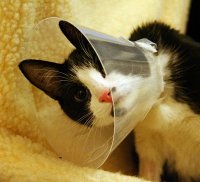 If your dog is scheduled to undergo surgery, whether a routine
spay/neuter or something more serious, you're naturally concerned about
how your pet will be cared for after the procedure and what care you
will need to provide for him once he is released from the veterinary
hospital.
If your dog is scheduled to undergo surgery, whether a routine
spay/neuter or something more serious, you're naturally concerned about
how your pet will be cared for after the procedure and what care you
will need to provide for him once he is released from the veterinary
hospital.-
Clinic Care
-
Wrapped the animal in warm blankets or towels until it wakes from the anesthesia.
During anesthesia, a pet's body temperature drops and the blankets are necessary to make him as comfortable as possible on waking.
The veterinarian or staff at the clinic will monitor the dog until he is fully awake to ensure he is recovering as expected.
Pain Relief
-
Ensure your pet will be given pain relief immediately following the surgery and ask the doctor about pain relief medications you can provide to your pet during recovery at home.
Instructions
-
Ensure that you follow the veterinarians instruction regarding when and how much to feed your dog and how much water it should consume. If you're taking the pet home immediately following surgery, ask the doctor how long you should wait before offering her water. It's also important to administer any medications according to the doctor's instructions.
Limits
-
If your dog is released from the clinic shortly after the procedure, it may still be under the effects of anesthesia. It may not have a good sense of balance or direction. To prevent her from falling and injuring itself, keep it confined until the drugs have left it system.
Your dog will need to stay indoors for at least a week following surgery, perhaps longer depending upon her exact condition and the specific procedure performed.
-
Monitoring
-
Some dogs will chew or lick on their surgical incision when it starts to heal. Monitor your dog's incision site and prevent her from chewing on the area. Your dog may need to wear an Elizabethan collar, which is designed to prevent her from reaching the incision site, if you are away and unable to monitor it activity. If the incision site swells, has discharge or bleeding, you should contact your veterinarian.
Is it okay for my pet to lick the incision?- If a dog licks the incision, the healing process may be delayed.
- Licking can remove stitches and cause the incision to open
- Licking can become a severe habit that is difficult to break
- Licking can cause infection as the mouth has many bacteria
- Dogs will frequently lick the incision when the owner is not watching such as at night time; if the skin looks red or excoriated the most common cause is from licking.
- To stop your pet from licking the following can be tried:
- Elizabethan collar can be placed on the neck; this will not help stop your pet from scratching at the region
- Cervical collar (bite not collar) is a less awkward device and can be effective at stopping a pet from licking the surgical site
- A tee shirt can be used to cover an incision on the chest or front part of the abdomen; gather the waist of the shirt up over the dog's back and wrap an elastic band around this part of the shirt.
- A bandage or sock can be used to cover an incision on a limb; fasten the top of the sock to the dog's limb with tape.
- Antipsychotic medication in some cases is needed
-
http://www.vetsurgerycentral.com/hernia.htm
Heartworm Disease in Cats-Different but dangerous

Heartworm disease is caused by a parasite that lives mainly in the blood vessels of the lungs. Cats are not a natural host for heartworm, but tend to develop severe and potentially fatal disease even when only a single worm is present.
Heartworm disease has been seen in several species, but dogs are very susceptible. It can be fetal and is difficult to treat, but fortunately heartworm disease is easy to prevent.

Feline heartworm is transmitted by an infected mosquito bite. Cats are susceptible to hearthworm disease even when kept indoors, as mosquitoes can fly find their way into the house. When the mosquito bites the cat to take its blood meal, it introduces the heartworm larva into the cats bloodstream. These larval heatworms invade the blood vessels in the lungs. These larval heartworms are capable of reproducing within 8 months of developing as adults. As they grow into adults they lodge themselves into the lungs and heart of the cat. Cats tend to have lower worm population then canines, as they have a stronger immune system. The damage by these parasites is still severe in cats and can cause death.

Exposure to mosquitoes carrying microfilariae is the main risk for infection. Even indoor cats are at risk, because mosquitoes are notoriously difficult to keep out of the home.
Signs and Symptoms of Heartworm Disease in Cats
- Coughing
- Labored or rapid breathing
- Weight loss
- Vomiting
- Lethargy
- Rarely, other signs can be seen, such as fluid accumulation in the abdomen, fainting, and neurological signs such as in coordination and seizures.
- Sudden severe breathing problems, collapse, shock, and/or sudden death can occur in some cases
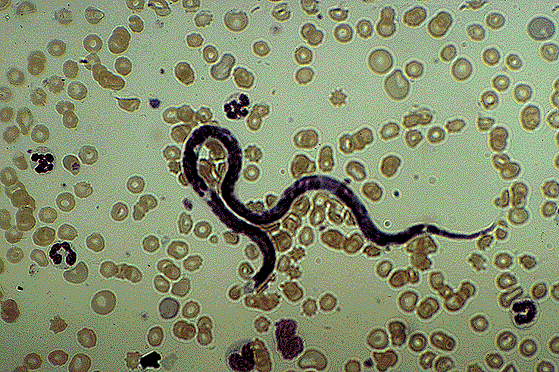
Antibody Test: This test is used to detect the antibodies made by the cat's immune system against the heartworm antigen. This test is not very reliable as it may test positive for a previous heartworm infection that has cleared up.
Antigen Test: This test helps in detecting presence of antigen in the blood. It may give false results as it detects the presence of only female heartworm. It may test negative results if the cat is infected by male or immature worms.
Echocardiogram and Radiography: Ultrasound may help detect presence of heartworms. Radiography helps detecting enlarged pulmonary arteries and enlarged right side of the heart and lung changes due to presence of heartworm.
Prevention of Feline Heart worm
It is always advisable to take your feline friend for regular veterinarian visits. Early diagnosis and treatment is always better than cure. You can always hope that the worm lives out it's lifespan within your cat without causing any major complications. A healthy cat is a 'purrrr..fect' pet.
Refer-
http://vetmedicine.about.com/od/diseasesandconditions/a/CW-Heartworm.htmhttp://www.buzzle.com/articles/heartworm-in-cats-feline-heartworm.html
Tuesday, April 3, 2012
Dog Vaccines - Understanding The Importance Of Vaccinations!

The importance of vaccinating your dog can never be overstated since it is very necessary to keep the dog alive. For without proper vaccinations the dog will die. Just like a new baby needs all the necessary immunizations to guarantee a proper health condition, your little puppy will also need the care of regular vaccination to keep it healthy and strong. Even if it is painful, causing the dog to scream and cry in pain, do not avoid it because it is the secret to a healthy dog's life.
These vaccines are small fractions of a disease given to the dog to avoid the infection of that disease in the future. This is one of the necessary things a dog owner should give the dog, as stipulated by the department of animal production and health.
There are only two types of vaccinations for dogs, Killed and live vaccines are their names. The version of the live vaccine available presently is the modified live vaccines, in this case the live vaccination has been modified so that the little portion of the disease injected into the dog's body will not cause harm but actually do the good it is supposed to do, by protecting and not causing the sickness it was supposed to avoid.
Killed vaccination kills the disease in it , prior to the injection of the vaccines. The reason for giving dogs these vaccines is to alert the immune system of the different types of diseases, so that the dog can develop immunity to these diseases and can never be affected by them in the future. This occurs by the production of antibodies in the blood system to fight against the onslaught of these diseases if they occur. It is very important for dog owners to visit the Vet clinic regularly for vaccinations, since each vaccine given protects the dog for just one year at most.
The frequent vaccinations of dogs are very important, since it protects and prevents awful diseases like, rabies, infectious Hepatitis, Canine Distemper, parvo virus, Corona Virus etc. from affecting the dog. The Canine Distemper is a disease that is capable of paralyzing the nervous system of the dog, this is the work of the canine virus. The disease destroys about fifty percent of dogs suffering from it, with its main targets set on dogs between the middle ages. But it also affect old dogs or puppies.
The very popular rabies vaccines are another type of vaccines a dog owner should give to the dog. If the rabies disease is not treated in the dog it can be transferred to human beings through dog bites or saliva.The major characteristics behavior of the sufferer of rabies is an over activeness, excess saliva output and uncontrolled behavior.
hepatitis vaccine(DHL), unlike that of human beings is another important vaccination for dogs. It is a lethal disease that can cause death, so the vaccines should not be missed. This disease is transferred through stool, urine and saliva from one dog to another, it does not affect human beings, but can affect any dog at all, regardless of its age.
Parvo virus is a disease that can be transferred from one puppy to another through feces, it is a disease that can infect puppies and middle age dogs. A vaccine is given to prevent this disease and it is also wise to stop your dogs from eating the feces of others.
Vaccination schedule for dog
Vaccinated mother…..( නිවැරිදි ආකාරයෙන් එන්නත් ලබාදී ඇති මවකගේ පැටවෙකුට..)Age of animal 6 week 8 week 10 week 12 week Annual booster
Vaccine Parvo 1 DHL 1 ARV 1 Parvo 2 ARV
DHL 2 Parvo
DHL
Unvaccinated mother …..( නිවැරිදි ආකාරයෙන් එන්නත් ලබාදී නැති මවකගේ පැටවෙකුට..)
Age of animal 5week 6 week 8 week 12 week 16 week Annual booster
Vaccine ARV 1 Parvo 1 DHL 1 Parvo 2 ARV 2 ARV
DHL 2 DHL
Parvo
This schedule can be change according to different conditions of animals.
If you have cat in your home anti rabies vaccine(ARV) must be vaccinated annually.
Side Effects of Vaccinations:
Pet owners worry about health risks associated with vaccinations. Prevention is better than cure. Vaccination protects pets against life threatening disease which may be incurable, highly contagious and expensive to treat, at later stages. Some mild reactions like low grade fever, dull aches and pains, vomiting, low appetite and activity are common with most animals.
Do not bath your pet for three days after vaccinating.
If you notice that your pet is experiencing problems, several hours, after being vaccinated, consult a vet right away. Vaccine related diseases are quite rare but nevertheless, chances should never be taken.
Article Source: http://EzineArticles.com/1662253, http://slveterinarian.blog.com/2011/03/19/vaccination-schedule-for-dog/
Subscribe to:
Posts (Atom)
Quick guide to cat breeds
Cats are one of the most beloved pets worldwide, and there are numerous breeds available to choose from. Whether you prefer a fluffy lap cat...

-
Rabbits that become afflicted with mange are actually being preyed upon by sarcoptic mites that burrow into the skin, most commonly around ...

